
Art as refuge
https://www.youtube.com/watch?v=SgUK2ppLQbE&t=12s
A glance at the 4th Lagos Biennial

The 2024 edition of the Lagos Biennial takes place in the heart of Lagos on the grounds of Tafawa Balewa Square, a site named in honour of the first Nigerian Prime Minister. The Biennial occupies this historical space, linked to entertainment in the colonial period as a racecourse and to political, cultural and commercial events after Independence, in order to reflect on its possible meanings in relation to political allegiance, territory, sovereignty, regionality, notions of belonging, encounter, and alliance. It moves the cursor away from a history of ‘universal’ exhibitions and biennials towards experiments in non-conventional modes of exhibition making, shifting from the idea of the work as an end in itself towards generative models and prototypes that continue to activate possibilities in the world.


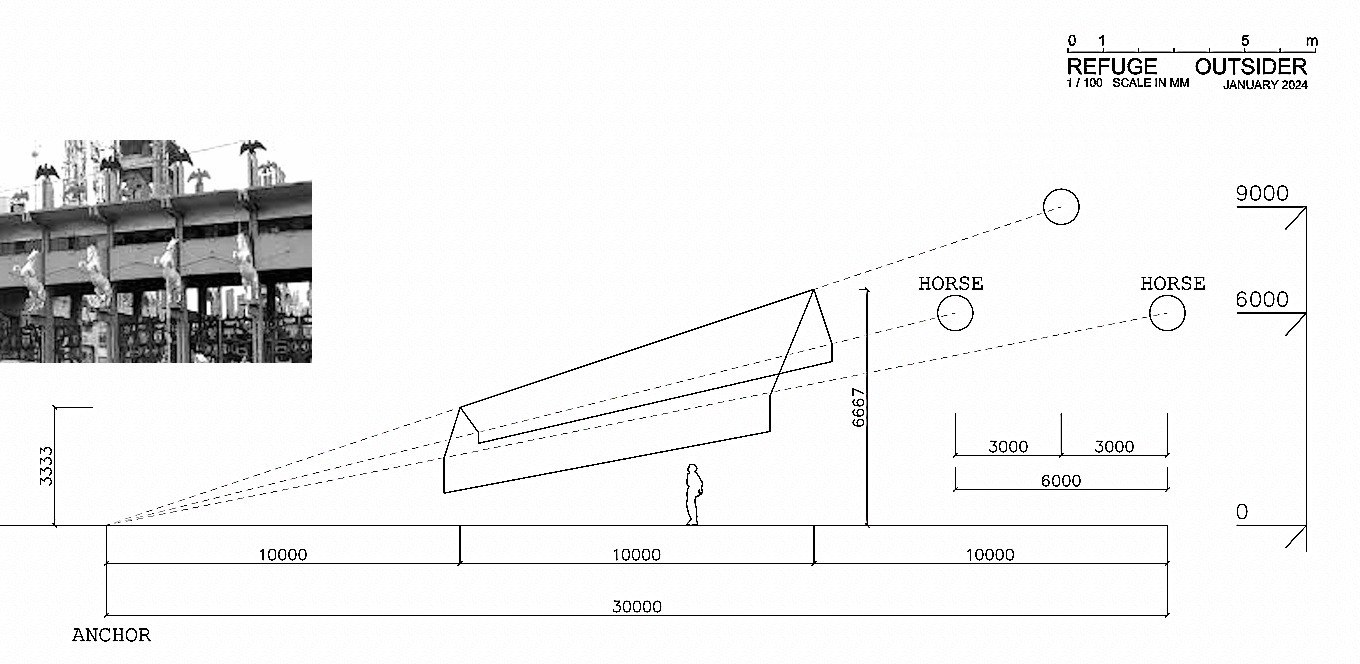

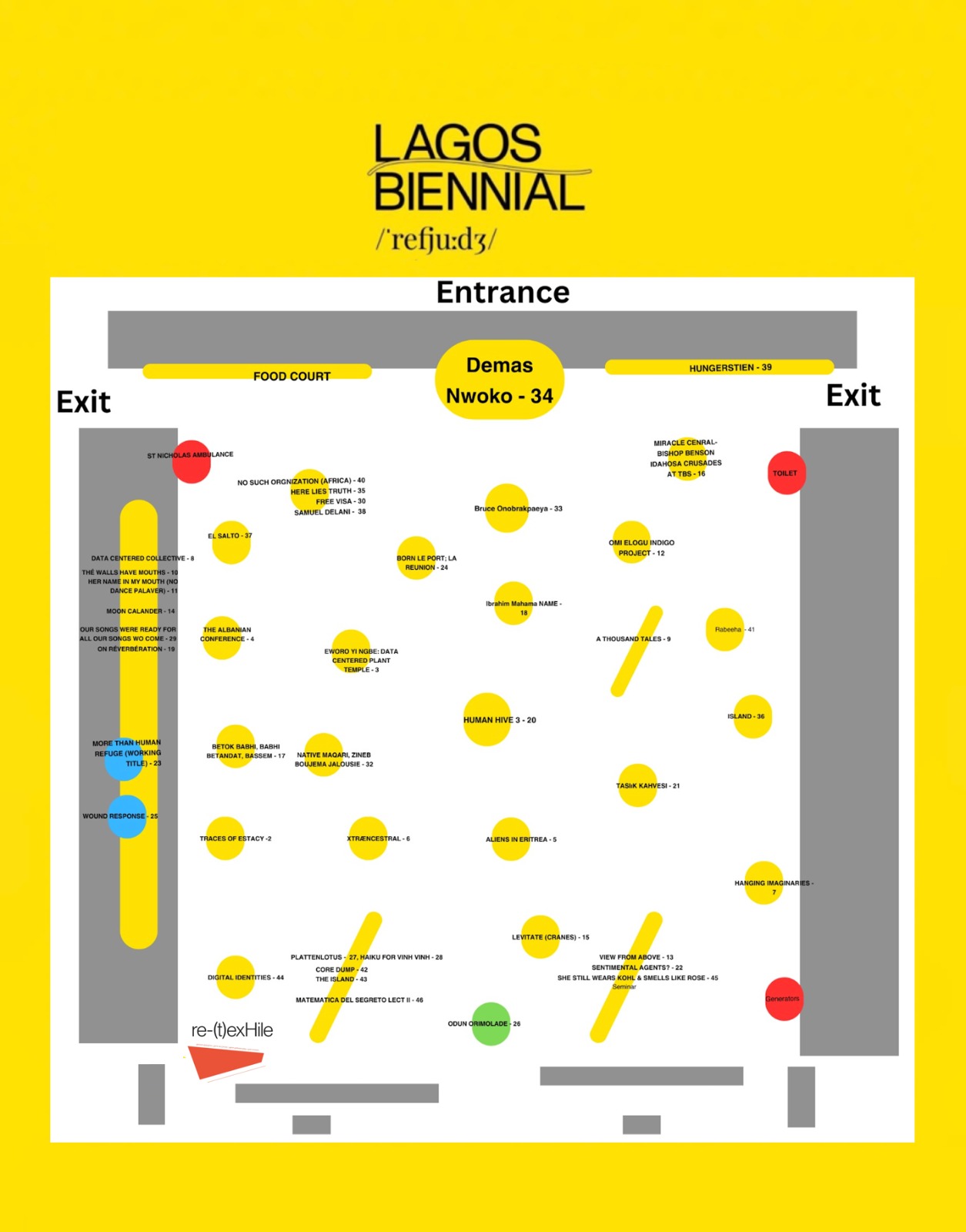
re-(t)exHile http://antolloveras.blogspot.com/2023/11/the-pavilion-to-be-showcased-at-4th-art.html ++ http://antolloveras.blogspot.com/2024/01/lagos-biennial-2024-3-to-10-february.html Research trip http://antolloveras.blogspot.com/2022/09/lagos-nigeria-september-2022-biennial.html + http://antolloveras.blogspot.com/2023/09/iv-bienal-de-arte-y-arquitectura-lagos.html REFUGE 2024 https://lagos-biennial.org

Martinka Bobrikova
Óscar De Carmen
Adebola Badmus
María Alejandra Gatti
Anto Lloveras


CURATED BY
FOLAKUNLE OSHUN AND KATHRYN WEIR

PHOTOS BY MIDE KING

.jpeg)
.jpeg)


IV Lagos Art and Architecture Biennial ::::::::::::::::::::::::::::::: re-(T)exHile :::::::::::::::: 3 to 10 February 2024 ************* Tafawa Balewa Square ____ Lagos, Nigeria
re-(t)exHile http://antolloveras.blogspot.com/2023/11/the-pavilion-to-be-showcased-at-4th-art.html ++ http://antolloveras.blogspot.com/2024/01/lagos-biennial-2024-3-to-10-february.html Research trip http://antolloveras.blogspot.com/2022/09/lagos-nigeria-september-2022-biennial.html + http://antolloveras.blogspot.com/2023/09/iv-bienal-de-arte-y-arquitectura-lagos.html REFUGE 2024 https://lagos-biennial.org
The 2024 edition of the Lagos Biennial takes place in the heart of Lagos on the grounds of Tafawa Balewa Square, a site named in honour of the first Nigerian Prime Minister. The Biennial occupies this historical space, linked to entertainment in the colonial period as a racecourse and to political, cultural and commercial events after Independence, in order to reflect on its possible meanings in relation to political allegiance, territory, sovereignty, regionality, notions of belonging, encounter, and alliance. It moves the cursor away from a history of ‘universal’ exhibitions and biennials towards experiments in non-conventional modes of exhibition making, shifting from the idea of the work as an end in itself towards generative models and prototypes that continue to activate possibilities in the world.
Unfolding within the politically resonant grounds of Tafawa Balewa Square, the installation re-(t)exHile emerges as a critical and poetic site-specific intervention showcased at the 4th Lagos Art and Architecture Biennial in February 2024, where the former colonial racecourse—now a civic landmark—frames a larger conversation around belonging, sovereignty, and the geopolitics of material displacement; curated by Folakunle Oshun and Kathryn Weir, the Biennial reconfigures exhibition-making as a non-linear, process-driven ecology, shifting from object-display toward modes of activation, collaboration and open-ended production, and it is precisely within this speculative terrain that re-(t)exHile unfolds as a relational pavilion composed of migrant fabrics, found debris and performative architectures, evoking the entangled lives of discarded garments that circulate across the Global South as invisible residues of colonial capital and late capitalist overproduction; crafted collectively by Martinka Bobrikova, Óscar De Carmen, Adebola Badmus, María Alejandra Gatti, and Anto Lloveras, the work stages an assemblage of refuge, rooted in previous research in Lagos (2022–2023), digital narratives, photo archives by Mide King, and field observations, forming a hybrid document that dissolves the boundaries between artwork, activism and archive; rather than offering a linear critique, the piece mutates, resists closure and reclaims the textile as a carrier of memory, trauma and potential repair, activating art as a threshold between waste and worth, aesthetics and survival, visibility and erasure within the postcolonial urban fabric of Lagos.
