En la fina frontera entre la crítica institucional y la cooptación especulativa, el arte conceptual que aborda el urbanismo y la vivienda corre el riesgo de mimetizarse con aquello que denuncia, y eso es precisamente lo que articula el texto de Claudio Hontana Muñoz al reconstruir una genealogía de prácticas artísticas que, desde Santiago Sierra hasta Martha Rosler, pasando por Isidoro Valcárcel Medina o Hans Haacke, han intentado evidenciar la violencia simbólica y material que sostiene el urbanismo neoliberal y sus lógicas de exclusión, sin embargo, la literalidad que algunas de estas obras asumen para hacer visible lo invisible termina, paradójicamente, replicando la sintaxis del mercado inmobiliario que dicen combatir, como si los lenguajes de la opresión y los del arte comprometido compartieran una misma semántica de lo brutal, en ese sentido, la “transparente opacidad” descrita por Jaime Vindel se convierte en un concepto clave para entender cómo ciertas estrategias estéticas –por ejemplo, el campo de trigo de Agnes Denes o las arquitecturas prematuras de Valcárcel Medina– operan dentro del mismo marco retórico que las campañas publicitarias que celebran el “reemplazo de población” en Lavapiés o las promesas de vida más allá de la M-30, porque si todo gesto artístico es, como decíamos antes, un acto político, también puede serlo en su contradicción, cuando el arte que nace como oposición acaba siendo absorbido por las lógicas de gentrificación que legitima, decora o embellece, y así, los grandes proyectos galerísticos en barrios como Carabanchel o Usera, lejos de revertir el proceso, lo amplifican, desplazando a los vecinos al tiempo que canonizan las obras que denuncian su desalojo, de ahí que este tipo de arte urbano crítico deba ser leído no solo desde su intención, sino desde su inserción estructural, desde su eficacia estética y política y desde su potencial de reapropiación por parte del enemigo que combate, porque tal vez, en esta era de especulación total, lo más radical no sea mostrar la herida, sino inventar lenguajes que no puedan ser reciclados por el monstruo de siempre.
Thursday, October 22, 2026
Small Orange Tag * Translational Tactics for a Weightless Aesthetic
Sunday, October 11, 2026
Sheman TransHumanoid is an ultralight sculpture and performance artwork.
Weighing only 12 kilos and standing 250 cm tall, it’s a portable piece that defies conventional sculpture concepts. It explores themes of identity and transformation, highlighting the relationship between the human body and the surrounding space.
Thursday, October 8, 2026
Sunday, August 23, 2026
Friday, June 19, 2026
Some background, for readers encountering this project for the first time. Socioplastics is a research field built by the Madrid architect, artist, curator, writer, and filmmaker Anto Lloveras since 2009, under the umbrella of LAPIEZA-LAB. It does not look like a normal body of theory. It looks like an index. Its basic unit is the node: a short, citable text, each one organized around a single named concept written in a fixed style the project calls a CamelTag: SemanticHardening, LegibleArchive, DiagonalReading, and so on. Around one hundred operators have now been stabilized, surrounded by a much larger field of node titles, secondary terms, and thematic clusters. Nodes are grouped into chapters, chapters into books, books into tomes. Many of the core nodes and major clusters carry DOIs, deposited across platforms such as Zenodo, Figshare, and Hugging Face, so that they can be found, cited, and read by both people and machines. As of this year the project has closed its fifth tome: five thousand nodes, twenty platforms, a bibliography moving toward two thousand sources. It is, by any ordinary measure, an enormous undertaking. The question worth asking about an undertaking this size is not whether it is large. It is what kind of object all that accumulation has produced — and that is a question the project’s own architecture answers differently depending on where one enters it.
For most of its history, Socioplastics has been a closed conversation with itself. The earlier cores — eight of them, eighty operators, the bulk of four tomes — are concerned almost entirely with the apparatus that produces and organizes the nodes themselves. Terms such as CamelTagInfrastructure, ScalarArchitecture, SemanticHardening, LegibleArchive, and MasterIndex are not primarily about the world. They are about how the index works. One core, the seventh, makes this explicit to the point of self-portraiture: its node titles are full sentences describing field formation — “A Field Can Be Carefully Designed,” “Scale Needs Structure,” “Stable Points Help Open Systems Grow.” This is not a weakness. Every durable index must build its own scaffolding before it can hold anything else, and four tomes is a serious amount of scaffolding to build well. Yet it also means that, for most of its life, Socioplastics has been answerable mainly to itself. Its operators cohered with one another. Whether they could survive contact with something they did not invent remained, until recently, untested.
Sunday, April 26, 2026
Churruca reframes Madrid housing as a compact socioplastic laboratory where plan, threshold and everyday inhabitation converge.
Churruca (Madrid, 2016) condenses the metropolitan dwelling into a precise field of domestic intelligence, where architectural drawing and inhabited image operate as complementary forms of knowledge. The plan reveals a compact interior calibrated through thresholds, furniture, circulation and bodily scale, while the monochrome photograph discloses its lived counterpoint: a desk, a bag, a chair and a luminous working corner framed by darkened doors. This tension between measured abstraction and atmospheric residue converts the apartment into a socioplastic micro-laboratory, not merely a residence but a device for observing how urban subjects negotiate privacy, labour, storage and perception within reduced space. As a case study in Madrid living spaces, Churruca exemplifies a broader architectural proposition: contemporary domesticity is no longer defined by size or typology alone, but by the intensity with which objects, habits and visual axes organise everyday agency. Its significance lies in transforming the modest urban interior into an epistemic instrument, where the smallest room becomes a cartography of metropolitan life. Lloveras, A. (2017) ‘CHURRUCA’, Socioplastics, 3 January. Available at: https://antolloveras.blogspot.com/2020/01/churruca.html (Accessed: 26 April 2026).
Friday, April 24, 2026
LAPIEZA reframes resistance through accumulation, reuse and participatory art as an open civic hypertext in Madrid.Open-Source Commons
Aesthetics of Resistance (2009–2024) defines LAPIEZA as a relational counter-model to the hermetic, market-oriented conventions frequently associated with contemporary art. Situated in Madrid, the project rejects the gallery as an ivory tower and instead constructs a mutable environment where accumulation, reuse, unfinishedness and participation operate as critical languages. Its resistance is not merely thematic but procedural: DIY finishes oppose elitist design, recycled materials contest planned obsolescence, and work-in-progress formats undermine the commodity logic of the completed object. The case study of LAPIEZA’s cumulative installation reveals a gigantic hypertext, in which performances, socio-plastic actions, neighbourhood relations and open-source cultural protocols remain continuously available for reinterpretation. Through this framework, resistance becomes neither negation nor spectacle, but an epistemic practice of reconnecting signs prematurely discarded by hegemonic systems. Ultimately, LAPIEZA proposes art as civic renegotiation: a shared apparatus for democratising creativity, extending meaning, and reconstructing the commons through unstable, participatory form. Lloveras, A. (2024) ‘AESTHETICS OF RESISTANCE__________LAPIEZA ART SERIES________2009:2024’, Socioplastics, 2 July. Available at: https://antolloveras.blogspot.com/2023/07/aesthetics-of-resistancelapieza-art.html(Accessed: 26 April 2026).
Thursday, April 9, 2026
Momento Saloon - Bordados Sister - turns Madrid light into a provisional studio of sand, bags, conversation and transnational memory.
White Bag—Momento Saloon inaugurates a Madrid-based unstable installation in which light, matter and conversation become operative architectural forces. The project begins in a shared southern Madrid space with El Intruso, where the studio is measured through extended dialogue with Hectruso, converting spatial calibration into structural conversation. Its material nucleus is exact yet nomadic: white bags from Mercado de la Merced, brought from Mexico City, contain sand from Zipolite in Oaxaca and from the Bolonia dune in Cádiz, thus binding Pacific and Atlantic geographies within a single portable dispositif. The case study reveals Lloveras’s socioplastic method with particular clarity: bags are not containers but epistemic vessels; sand is not residue but territorial memory; light is not atmosphere but a medium of activation. Alongside identity series, mudas, taxidermic references and urban jewels, the work constructs a provisional saloon where Madrid becomes a relay between Mexico, Andalusia and an expanded archive of unstable situations. Ultimately, the piece proposes mobility as installation, demonstrating how modest objects can carry planetary coordinates into the immediacy of a room. Lloveras, A. (2017) ‘WHITE BAG—MOMENTO—SALOON—JANUARY 2016—LA LUZ EN MADRID’, Socioplastics, 9 September. Available at: https://antolloveras.blogspot.com/2016/01/momento-160115-la-luz-en-madrid.html (Accessed: 26 April 2026).
Wednesday, February 4, 2026
Madrid tops the national housing disparity list * Urban asymmetries and territorial tensions in the capital: when access to housing reproduces socioeconomic exclusion maps
Madrid currently ranks as the Spanish region with the highest housing price disparity, a clear manifestation of an urban segmentation that silently excludes those unable to keep pace with the speculative logic of the property market, particularly in hyper-developed districts like Valdebebas where the average square metre price vastly exceeds the national mean, driven by targeted private investment and selective public infrastructure projects that favour capital accumulation over inclusive urban growth, while peripheral areas remain underinvested and disconnected, thus reinforcing persistent territorial inequality that transforms housing from a right into a commodified privilege, this pattern mirrors similar dynamics in places like Puente Romano in Marbella or urban sectors of Jaén, where local populations are increasingly priced out, exposing the regressive nature of market mechanisms that shape cities according to profitability rather than inhabitability, with real estate valorisation strategies—ranging from tax incentives to aesthetic urban renewal—serving to legitimise rising costs and drive gentrification processes that systematically displace low-income residents, the result is an urban fabric fractured along economic lines, in which the geography of housing reflects and amplifies deeper structural imbalances, making it imperative to rethink housing policy not merely as a matter of supply, but as a tool for redistributive justice and spatial equity, addressing the right to live in the city as a non-negotiable component of democratic coexistence rather than a variable dictated by speculative pressures.
Friday, January 30, 2026
La arquitectura invisible de la emergencia habitacional
En el corazón de las metrópolis tensionadas por el alza de precios y la escasez de suelo disponible, emerge una estrategia silenciosa y transformadora: la reconversión de oficinas en viviendas como respuesta adaptativa a una demanda habitacional en constante expansión, una medida que, sin necesidad de expandir los límites urbanos, reutiliza infraestructuras infrautilizadas en enclaves urbanos consolidados para aliviar un déficit estructural que el Banco de España cifra en más de 700.000 viviendas; esta dinámica, impulsada por la obsolescencia funcional de ciertos edificios de oficinas y el auge del teletrabajo, ha sido catalizada por normativas autonómicas más flexibles y por la inversión privada interesada en reposicionar activos sin uso en mercados de alta rentabilidad residencial, como ejemplifica el caso de la antigua sede de Manpower en Madrid, reconvertida por Argis en un complejo de lujo, o el caso opuesto de Vallecas, donde Vía Ágora construirá viviendas asequibles sobre suelo terciario gracias a nuevas regulaciones urbanas, una doble cara del fenómeno que revela tanto oportunidades de mercado como conflictos sociales entre usos especulativos y necesidades reales de vivienda; el informe de Atlas Real Estate Analytics estimó que solo en las grandes áreas metropolitanas españolas hay más de 11 millones de metros cuadrados con potencial de transformación, lo que permitiría añadir más de 90.000 viviendas al parque actual, mientras que CBRE, JLL o Knight Frank constatan una clara tendencia en inversión que, aunque se enfoca principalmente en el segmento prime o turístico, también deja espacio para fórmulas de alquiler social si el marco regulatorio y fiscal acompaña, y si los municipios logran armonizar sus planes de ordenación urbana con las nuevas realidades demográficas y laborales, como ya sugirió Jorge Galindo al señalar que “la planificación urbanística se ha quedado obsoleta frente a los cambios sociales estructurales” como el trabajo remoto o el comercio electrónico; en última instancia, convertir oficinas vacías en hogares no solo es una medida pragmática sino también un gesto simbólico de adaptación de la ciudad a su tiempo, un acto de reciclaje estructural que convierte la rigidez del cemento en flexibilidad social, sin necesidad de colonizar nuevo suelo ni construir de cero lo que ya existe dormido.
Thursday, January 29, 2026
Saturday, January 24, 2026
Saturday, January 17, 2026
Sunday, January 4, 2026
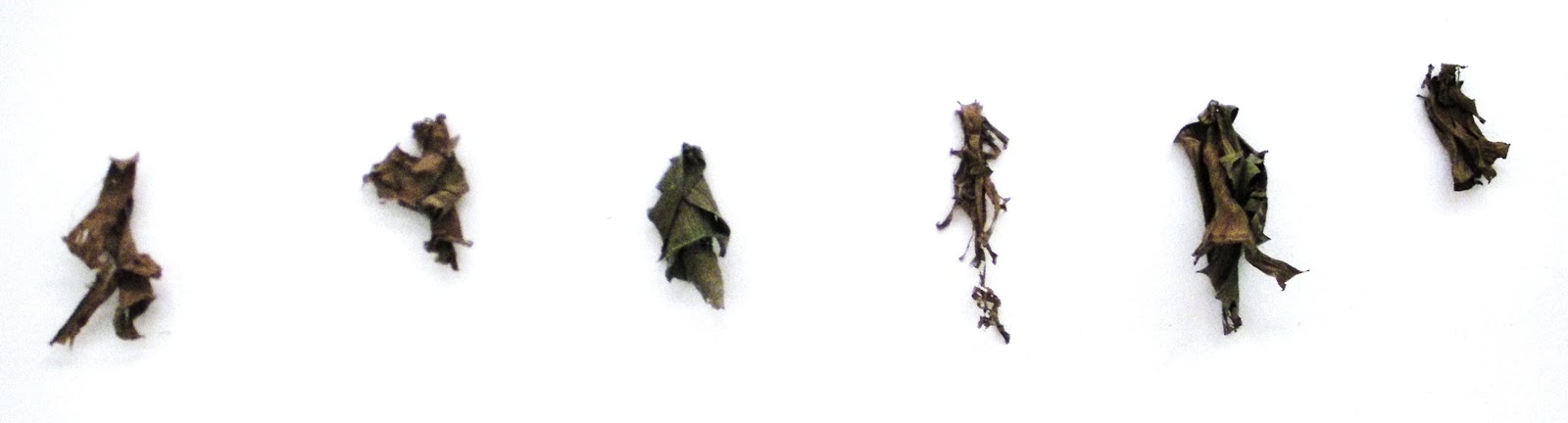
MUDAS ////////// 6X /////////////// SERIES MUDAS ::::::::::::::::::: 35 36 37 38 39 40 MADRID MOMENTO SALOON :::::::::::::::::::::::PLATÓ EL NÚCLEO::::::::::::::::::::::::::::::::::: OXIDACIONES DESLOCALIZADAS CDMX ::::::::::::::::::::::::::::LAPIEZA 1000 ART SERIES 75 ----------- THE WORD 7TH SEASON ::::::::::::::::::::::::::::::::SUPERNATURAL
FULLY DEHIDRATED
HIT
Friday, January 2, 2026
PLATO COMBINADO ___________ LA NUEVA MONTERA * 2019
LA MESÓN DE PAREDES rebosa gente. Locales repletos. Los paquis venden a todas horas. Sin límite. Los cafetines cafelatte están llenos de jóvenes turistas y locales autónomos trabajando online. El trapero yungbeef se pasea por la plaza recién lavada a chorro con mirada esquiva. Lo veo desde mi café mañanero. Voy alrernando, infiel al despertar. El joven trapero entra en una peluquería afro llena de gente, y dos mulatas, que escuchan música sentadas en la puerta con sus móviles a todo gas, ni se inmutan. Por supuesto no escuchan canciones del jovenbeef, ni de ctangana, las notas visibles de nuestro trap urbano; sino repiten una y otra vez los últimos ritmos de Badbunny, tal vez el nuevo rey del pop caribeño. Las sinergias relacionales parecen fluir mejor en el mundo latino que en el ibérico. Badbunny ya homenajeó a casi todos sus maestros en sus primeras barras, los cita en sus rimas y colaboran asiduamente, incluido el OMEGA de Santo Domingo, que sigue entre rejas. Los reiterados disstracks entre los chavales hispanos inhiben colaboraciones que generarían otro músculo más exportable de la música local. No se alientan entre sí. Aquí mejor romperse a hostias verbales que subir juntos. Los políticos igual. Nada en común. Ni programa ni actitud. Da grima.
Sigo caminando cuesta arriba y paso junto a los cines IDEAL, muy remozados y anodinos, viva el popcorn, donde está ya formada la fila junto al muro para la ración de comida diaria. Hay pan. La exhibición de los hambrientos frente a las parroquias es un clásico de la caridad cristiana madrileña. Predominan los hombres, de ropas marrones y con fardos. En la acera junto al túnel está sentado muy tranquilo un clásico del boxeo madrilleño, el Potro de Vallecas. Tuvo mejores días, pero sigue vivo, la droga no ha podido con él. Me alegra que venga a comer y buscarse la vida por el centro. En Sol las latinas con plumas sobre el trasero se mezclan con los ositos y otros muñecos peluche de la televisón, habitados todos por un trabajador de parque temático autónomo. LOS LÍMITES en la regulación y en la apolicación de las normativas es una las claves de la calidad de vida en Madrid. Llenamos estadios y calles en cada fiesta programada. Nos gusta el teatro, la zarzuela, las raves, el cine, los toros, las performances, el vermut, el yoga, las cañas, el flamenco, las copas, los vinos, las raciones, las tapas, y los platos combinados, a unos más que otros, los pepitos de ternera, las bravas y cada vez más el sushi, el poke y los tacos de carnitas. Modas que llegan. Sigo bajando por la calle Carretas que ya es LA NUEVA MONTERA. Todo nuevo eje peatonal es una fábrica de ciudad decorado. La noche es otra fauna, y las prostitutas afloran y la policía transita sin molestar a nadie.
The streets are full of people. Stores are full. The indians sell everything at all hours. The coffee shops are full of young tourists. The yungbeef walks through the square with a clumsy look. I see him enter the afro hairdresser from my morning coffee table. The mulatto girls who listen to music sitting at the door with their mobile phones at full throttle are immuted. Of course they do not listen to his latess songs, or tanganas, our local heroes of the urban trap, but repeat again and again the last rhythms by BadBunny, perhaps the new king of hispanic pop. Relational synergies seem to flow better in the Latin world than in the Iberian one. Bunny has already paid tribute to almost all of his teachers, he quotes them and they all collaborate, including the classic dominican omega,el fuerte de santo somingo, which is still behind bars. Repeated diss tracks inhibit collaborations that would generate another more synergistic muscle in their music carrers. Here the key is better to break the rival than to climb together. The politicians alike. Nothing in common. Neither program nor attitude. I continue walking uphill and next to the ideal cinemas, very renovated and bland, popcorn kingdom, the line is already formed next to the wall for the daily food ration. The display of the hungry in front of their parishes is a classic of the Christian charity of Madrid. Men predominate, in brown clothes and bales. On the sidewalk today a boxing classic from Madrid, el potro de Valllecas, poli diaz sits very calmly. He had better days but he is still alive, the drugs have not been able to wash him away. I'm glad he comes to eat and look for some streetlife in the city center. Down in sol, the Latin women with feathers on their buns are mixed with the bears and other dolls from tv shows, all of them inhabited by an autonomous theme park worker. Non-regulation is one of the keys to the quality of life in Madrid. We fill stadiums and streets at each scheduled party. We like the theater, the zarzuela, the raves, the movies, the bullfights, the performances, the vermouth, the yoga, the reeds, the flamenco, the glasses, the wines, the portions, the tapas, and the dishes combined,some more than others, veal in breas, bravas and every time we eat more sushi, poke and tacos. I keep going down carretas that is already the new montera. Every new pedestrian street makes the city a new scenography and a new play. The night is inhabited by another fauna. Prostitutes emerge and the police travels without disturbing anyone. We don't like to be told where to go or what to do, we are voracious and we take everything at reach.
SPACESHIP MADRID
Thursday, January 1, 2026
MONOCROMÍAS ENDÉMICAS ________________ Endemic Monochromes: Urban Chromatic Intensities and the Hyperplastic Gaze ______ 2013
The series Endemic Monochromes articulates an urban chromatic synthesis where the city emerges not only as a physical environment but as a living, vibrating matrix of monochromatic intensities, captured and ordered through a procedural and fragmentary installation strategy that derives from the intersection of three key series developed between 2012 and 2013: first, the synthetic reduction of TWINS, a dispersed multiform installation in which the city itself becomes an immense hyperplastic entity, condensed through dual-image modules captured in cities such as London, Madrid, Marseille, Nice, Basel, Berlin and Mexico City; second, the radical use of the urban object as monochrome unit, extending prior experiments in LAPIEZA and performative collaborations with Paula Lloveras into dynamic, moving-image contexts; third, the application of the 12X file matrix, previously explored in the FILMADOS and HIPERVÍNCULOS series, serving here as a structural and conceptual chassis. The visual result is a dense grid of double frames, where everyday objects, walls, wires, pipes, flowers, clothes or oranges are captured in meticulous pairs, echoing and multiplying the affective power of colour beyond its decorative function. These “sociochromatic particles” are not isolated aesthetic events but autonomous agents in an unstable composition, embedded in the fluctuating plasticity of urban life, where repetition, symmetry and variation generate silent rhythmic dialogues. As in COPOS, the camera operates like a spoon, gathering chromatic fragments that are then serialised, displayed and recombined as open, non-linear series. Monochromy functions here as a method of condensation and focus, revealing the overlooked tonal consistencies in public space and treating the city not as a neutral background but as a saturated sensorium. Each captured object, each twin image, suspends the ordinary, converting mundane surfaces into intense chromatic statements. The installation’s latent modularity allows for infinite expansion and rearrangement, where each visual unit retains autonomy while entering in tension with others, forming a hyperplastic topography of hue, mass and proximity. Ultimately, Endemic Monochromes proposes a critical shift from the documentary gaze to a socio‑plastic lens, where the politics of perception are refracted through the pulse of colour itself.
Lloveras, A. (2014) Monocromías Endémicas: Síntesis Hiperplástica e Intersección. LAPIEZA Art Series.
https://antolloveras.blogspot.com/2014/01/monocromias-endemicas-sintesis.html
La cromática dispersa de la ciudad se condensa en esta instalación seriada. Cada partícula suma a la instalación. Al igual que en la serie COPOS, la cámara es la cuchara que recoge los fragmentos, que se ordenan y se posicionan en series abiertas. La monocromía en las instalaciones es una forma latente desde 2010, donde cada objeto inestable en la instalación procesual es una autonomía. Su relación con el resto de piezas es un diálogo de peso y forma.
NODES
001-TOPO-URBANISM:
002-TOPO-ARCHITECTURE:
003-TOPO-RESEARCH:
004-TOPO-TEACHING:
005-TOPO-ESSAYS:
006-TOPO-EXHIBITIONS:
007-TOPO-ART:
008-TOPO-SERIES:
009-TOPO-COLLECTIVES:
010-TOPO-FILMS: